
Navigating the Tricky Terrain of Reverse Mortgages
- May 30, 2026
- Posted by: admin
- Category: Blog

A reverse mortgage is often presented as a simple idea: turning home equity into income. For homeowners who have spent decades paying down a mortgage, the idea of finally “accessing” that value without selling the home can sound like financial relief.
But beneath that simplicity is a complex financial product with long-term consequences that are often misunderstood. For some households, it can provide stability in retirement. For others, it can significantly reduce future financial flexibility and inheritance.
Understanding how it works—and what it really costs—is essential before making any decision.
What Is a Reverse Mortgage?
A reverse mortgage is a loan that allows homeowners to convert part of their home equity into cash while continuing to live in the home.
Instead of the borrower making monthly payments to a lender, the lender pays the homeowner. Over time, the loan balance grows as interest and fees accumulate, while the homeowner’s equity decreases.
The loan is typically repaid when one of the following happens:
- The homeowner sells the property
- The homeowner permanently moves out
- The homeowner passes away
At that point, the loan balance—including interest and fees—becomes due.
Because of this structure, a reverse mortgage is less about income alone and more about trading long-term home equity for short-term financial flexibility.
Why Reverse Mortgages Matter (Even If Few People Use Them)
Even though reverse mortgages are relatively uncommon—used by a small percentage of homeowners—they become highly relevant in retirement planning discussions.
This is especially true for adult children helping aging parents make financial decisions. At that stage of life, home equity is often one of the largest remaining assets, and decisions about it can significantly shape retirement stability and inheritance outcomes.
What makes reverse mortgages important is not their popularity, but their impact when used.
Basic Eligibility Requirements
To qualify for most reverse mortgage programs, homeowners generally must meet several conditions:
- Be at least 62 years old
- Live in the home as a primary residence
- Own the home outright or have a very small remaining mortgage balance
- Be current on federal debts such as taxes or student loans
- Maintain the property in acceptable condition
- Complete mandatory counseling approved by housing authorities
In many cases, lenders also require that borrowers set aside funds from the loan to cover property taxes, insurance, and maintenance costs.
These requirements are designed to ensure the borrower can maintain the home, since the property itself is the core collateral.
Types of Reverse Mortgages
Not all reverse mortgages are the same. There are three main categories, each with different rules and risk levels.
1. Government-Insured Reverse Mortgages (HECM)
The most common type is the Home Equity Conversion Mortgage (HECM), which is backed by the Federal Housing Administration (FHA).
These loans include additional protections for borrowers, but they also come with strict rules and limits on how much can be borrowed.
2. Proprietary Reverse Mortgages
These are private loans offered by financial institutions and are not government-insured.
They are often used for higher-value homes because they can allow larger loan amounts, but they typically come with different pricing structures and fewer protections.
3. Single-Purpose Reverse Mortgages
These are usually offered by state or local governments and nonprofit organizations.
They are generally the least expensive option, but funds must be used for a specific purpose, such as home repairs or property taxes.
How You Receive the Money
Reverse mortgages offer several payout structures, and the choice affects both flexibility and cost.
Line of Credit
- Funds are available as needed
- Interest is only charged on the amount used
- Can be more cost-efficient over time
- Offers flexibility for unpredictable expenses
Monthly Payments
- Provides steady income over time
- Can be structured for a fixed period or for life
- Helps supplement retirement income
- Can sometimes be combined with a line of credit
Lump Sum Payment
- Full amount received upfront
- Typically fixed interest rate
- Less flexible and can be more expensive long-term
- Higher immediate access to cash
Each option changes how quickly equity is reduced and how interest accumulates over time.
The Core Trade-Off: Access vs. Ownership
The most important concept in a reverse mortgage is this: you are converting ownership equity into debt.
While you receive cash, the loan balance grows over time due to:
- Interest
- Fees
- Insurance costs
As the loan grows, the share of the home that belongs to the lender increases, and the portion available to you or your heirs decreases.
This is why reverse mortgages are often described less as income tools and more as equity conversion tools.
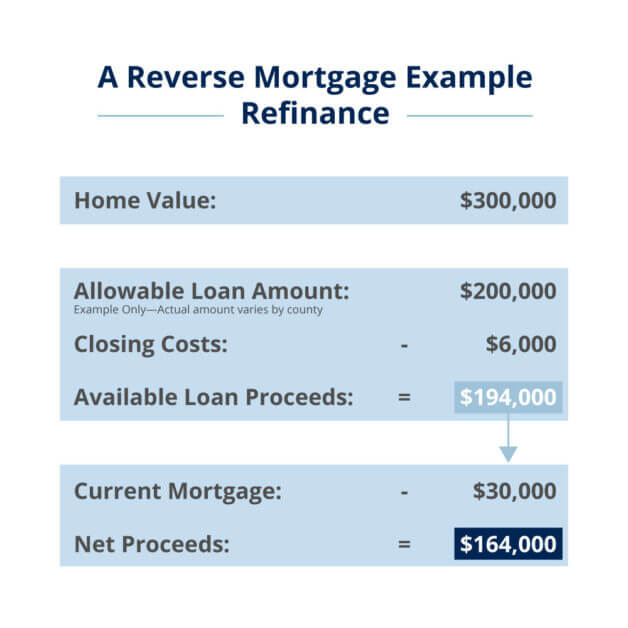
How Much Can You Borrow?
The amount available through a reverse mortgage depends on several factors:
- Age of the borrower (older borrowers can typically access more)
- Current interest rates
- Home value
If there are multiple borrowers, the calculation is based on the youngest borrower.
In general, higher home values and older age lead to higher borrowing limits.
Fees and Ongoing Costs
Reverse mortgages come with a range of upfront and ongoing costs that can significantly affect long-term value.
Upfront Costs May Include:
- Origination fees
- Appraisal and closing costs
- Title searches and inspections
- Mortgage insurance premiums
Ongoing Costs May Include:
- Interest on the loan balance
- Servicing fees
- Annual mortgage insurance premiums
- Property taxes and homeowners insurance
These costs accumulate over time and directly reduce remaining equity in the home.
Important Risks and Hidden Triggers
One of the most overlooked risks is that reverse mortgages can become due earlier than expected under certain conditions.
For example:
- The homeowner moves out permanently
- The home is unoccupied for an extended period
- The borrower fails to maintain property obligations
In such cases, repayment may be required sooner than planned, potentially forcing the sale of the home.
This is particularly important for older homeowners who may face health-related absences.
Impact on Government Benefits
In some situations, funds received from a reverse mortgage can affect eligibility for need-based government programs.
Programs such as Supplemental Security Income (SSI) may consider liquid assets when determining qualification, which can create unintended consequences depending on how funds are received and managed.
This makes timing and structure important when integrating reverse mortgage income into a broader retirement plan.
Alternatives to Reverse Mortgages
Before committing to a reverse mortgage, it’s often worth exploring other options that may preserve more long-term equity.
Home Equity Loan (HEL)
- Lump sum loan secured by home equity
- Fixed interest rate
- Regular monthly payments required
- Requires income and credit qualification
Home Equity Line of Credit (HELOC)
- Revolving credit line secured by home equity
- Variable interest rate
- Interest paid only on funds used
- Flexible borrowing during draw period
Downsizing
Selling the home and moving into a smaller property can:
- Unlock equity directly
- Reduce ongoing living expenses
- Eliminate mortgage-related obligations
While emotionally difficult, downsizing can sometimes provide more financial clarity and long-term flexibility.
Final Thought: A Tool With High Stakes
A reverse mortgage is neither inherently good nor bad—it is a trade-off tool. It provides access to home equity in exchange for reduced ownership over time.
For some retirees, that trade-off improves quality of life by easing cash flow pressure. For others, it can reduce inheritance, increase long-term costs, and create unexpected risks.
The key is not just understanding how it works mechanically, but recognizing how it fits into a broader retirement strategy.
Because once home equity is converted into income, reversing that decision is rarely simple.
Careful evaluation, professional guidance, and family discussion are often essential before moving forward.